Building in the Lowcountry
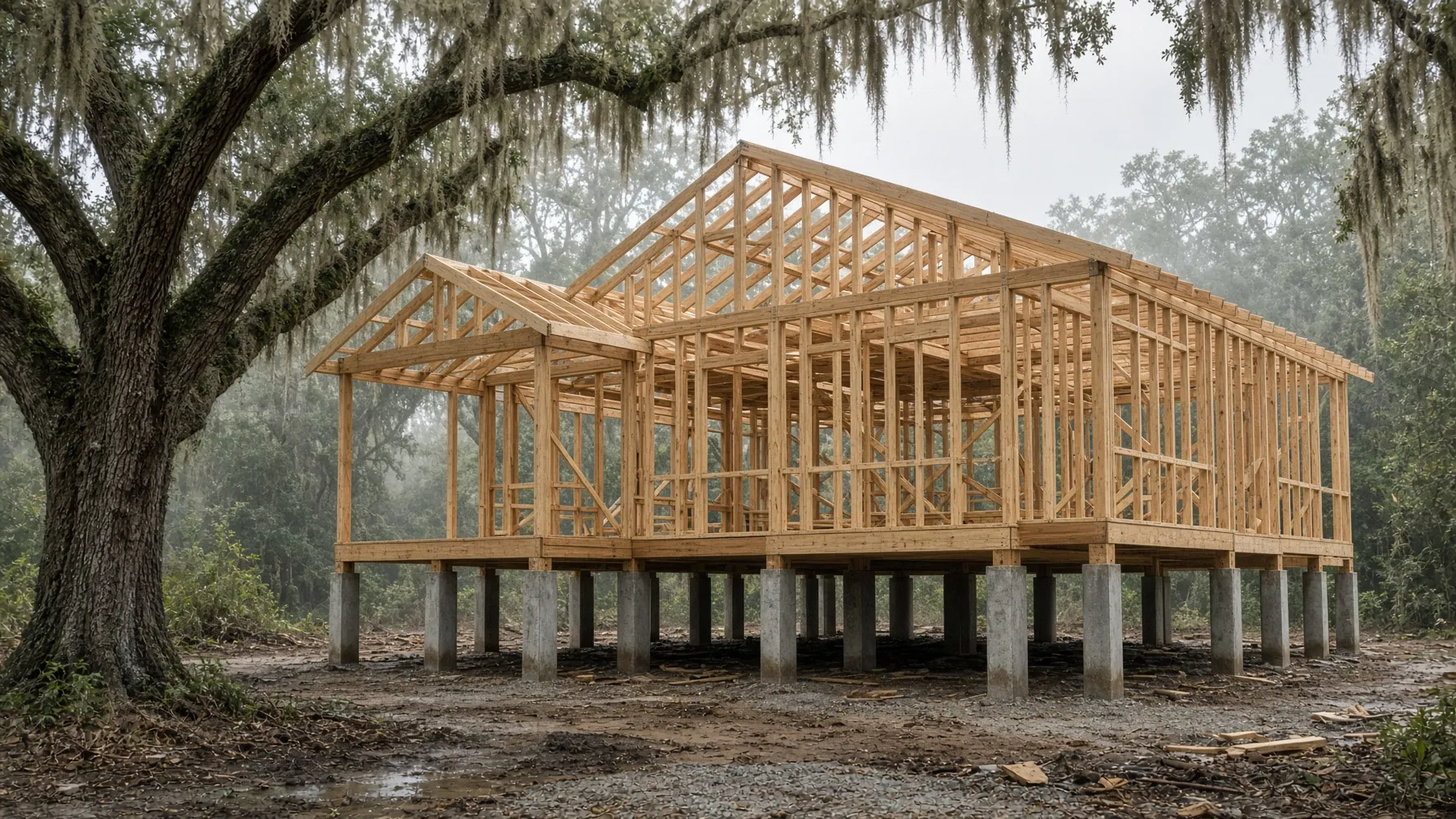
Building near the South Carolina coast brings a different set of rules from building in the Piedmont. Most of them come back to water and trees.
Flood zones decide the foundation
Much of the Lowcountry sits in mapped flood zones. Homes there must have the lowest floor above the base flood elevation, often with extra height required by the county. That is why so many coastal homes stand on piers or a raised crawlspace. A raised foundation also lowers flood insurance costs for the buyer.
Grand trees are protected
Live oaks are part of the region’s character, and many Lowcountry towns and counties protect large specimen trees by ordinance. A tree survey comes early, and the street and lot layout bends around the trees worth keeping. Done well, the oaks become what makes the neighborhood feel established on the day it opens.
Wind
Coastal counties carry higher wind design requirements. Roof connections, window ratings and sheathing nailing all step up, and inspectors check them.
Wetlands and marsh
Tidal marsh and freshwater wetlands are common. They are mapped, buffered and usually kept as open space. Lots that back onto preserved marsh are often the most sought after in the community.