Red clay, rock and what grading really costs
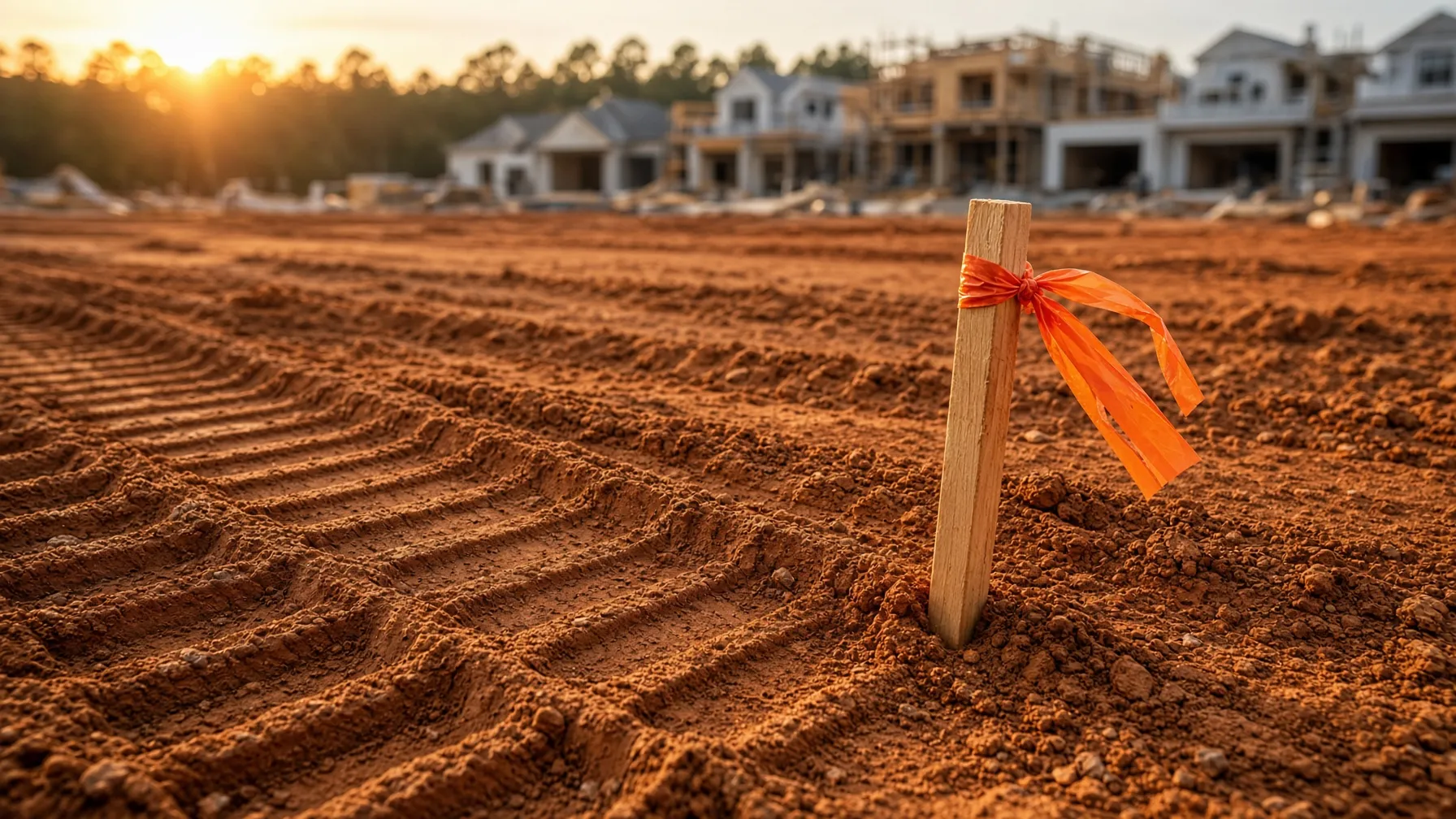
The Piedmont’s red clay is good for building on once it is compacted. Getting it there is where the money goes.
Moisture
Clay holds water. Wet clay will not compact, so a rainy month can stop earthwork for weeks. We plan heavy grading for the drier part of the year when possible, and the schedule includes room for weather.
Balance
Moving dirt across a site costs far less than hauling it in or trucking it away. A good grading plan balances cuts against fills so the site uses its own soil. On rolling land that can mean adjusting road grades by a foot or two, which saves a lot of money.
Rock
Parts of the Carolinas have rock close to the surface. Hitting it during a sewer trench means hammering or blasting. That is why we drill test borings before we finish the engineering, not after.
Erosion control
Bare clay washes off quickly in a summer storm. Silt fence, sediment basins and fast seeding are required by permit. They are also how we stay good neighbors to the streams and properties downhill.
Why it matters to a land seller
Grading and utilities are often the largest costs in turning raw land into lots. A tract that is flat, well drained and near sewer will support a higher land price than a steeper one the same size. When we explain an offer, this is usually where the numbers come from.