What we look for in a piece of land
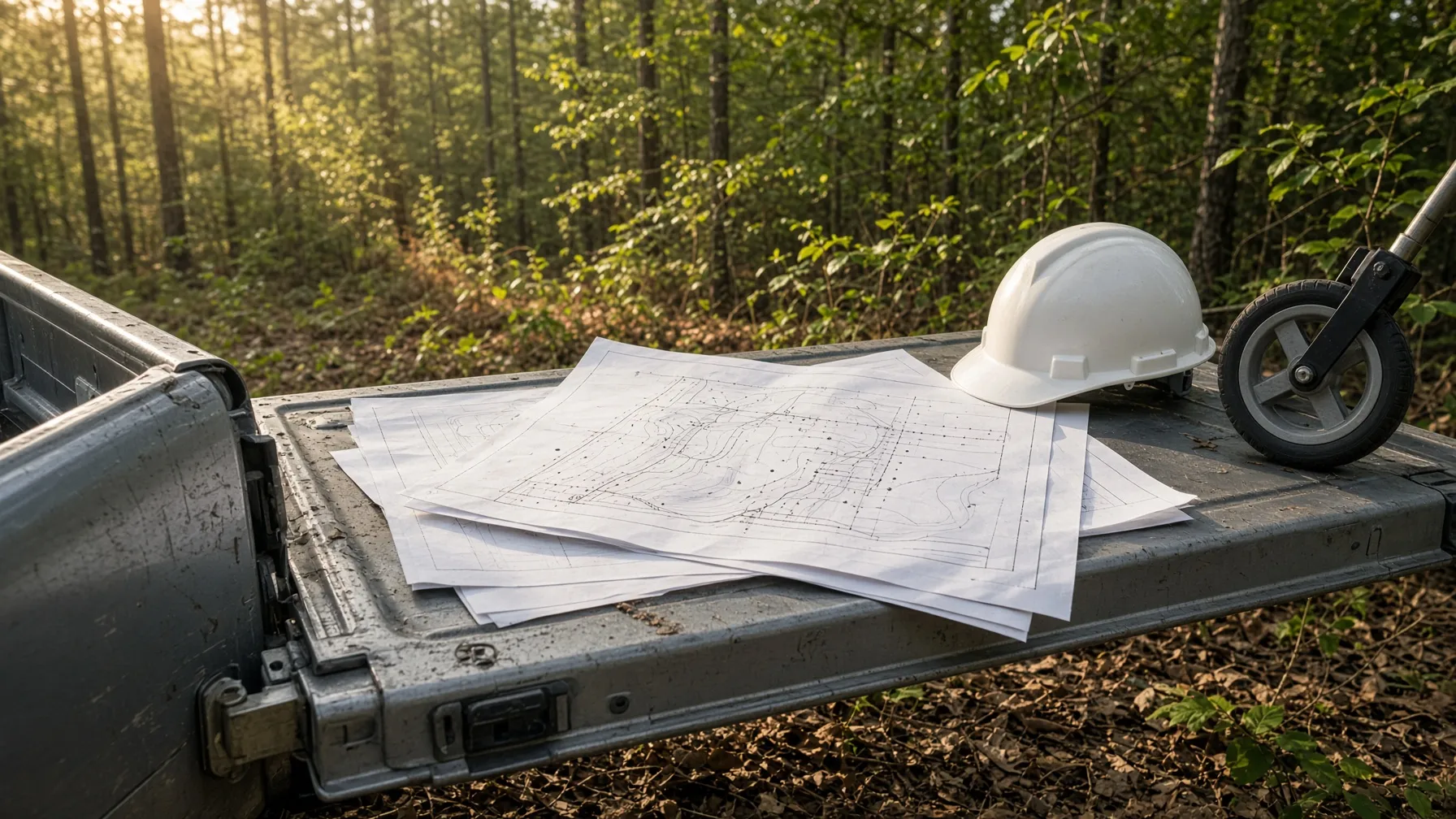
Most land that comes to us does not become a neighborhood. That is not a judgment on the land. It is a list of physical and legal facts that decide whether homes can be built on it, and at what cost. Here are the five we check first.
1. Access
A parcel needs legal frontage on a public road, or a recorded easement that can carry a subdivision street. Landlocked tracts and tracts reached by a shared farm path are common in rural North Carolina. They can be solved, but solving it is often the first and longest conversation.
2. Sewer and water
This is the single biggest driver of how many homes a property can hold. With public sewer at or near the property line, small lots and townhomes become possible. Without it, every home needs its own septic system. That means soil tests, larger lots and far fewer homes. We ask the county and the utility provider before we ask anything else.
3. Zoning and the path to change it
Current zoning tells us what is allowed today. The county’s land-use plan tells us what the county wants tomorrow. If the two disagree, a rezoning may be realistic. If they agree and the answer is one home per five acres, it usually is not.
4. What is on the ground
We pull floodplain maps, wetland inventories, soil surveys and topography for every parcel. A creek through the middle of a tract can be a feature for walking trails and open space. It can also cut the buildable area in half. Steep slopes and rock push grading costs up fast.
5. Where people want to live
Schools, commute times, and the price of new homes nearby set what a finished lot is worth. That number, minus everything above, is what we can pay for the land.
What this means if you own land
You do not need a survey, a plan or a price to talk to us. A parcel number or an address is enough for us to run these checks. We will tell you what we find, including when the answer is that the land is worth more to someone else.